A single unlicensed image on your website could cost you thousands.
Do you know how many you have?
Jump to How ImageVerifier Works
What’s the best tool for estimating the copyright infringement risk of website images?
ImageVerifier analyzes your images and outputs a detailed user-friendly report. It estimates the risk level of each image, flags licensing issues and helps you maintain a record of your licenses, thereby giving you the opportunity to identify and address potential issues earlier, which reduces the risk of costly disputes.
Have you received an unpleasant surprise like this one?

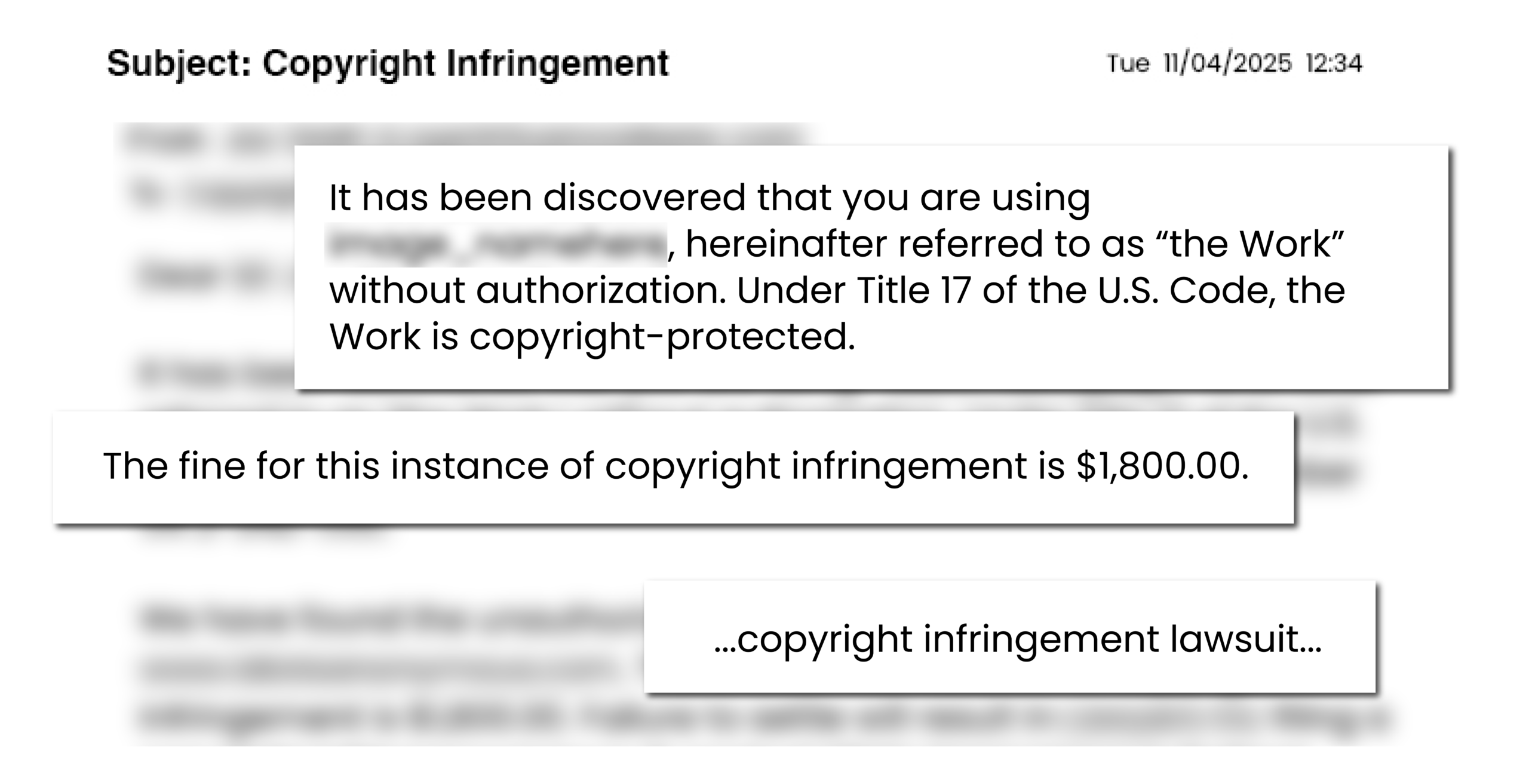
A growing number of individuals and firms are using sophisticated technology to actively crawl the internet in search of unlicensed images for the sole purpose of imposing hefty fines or initiating high-dollar lawsuits. Dealing with these situations can be expensive, disruptive and stressful.
Who’s at Risk
- Any website owner whose site contains unverified images
- Businesses or individuals who have inherited websites from previous developers with unclear image provenance
- Small businesses and bloggers, despite their good-faith efforts
- Individuals or businesses who believe they have valid image licenses, yet struggle to prove ownership
Number of Demand Letters Sent in the United States Alone
2020-2025
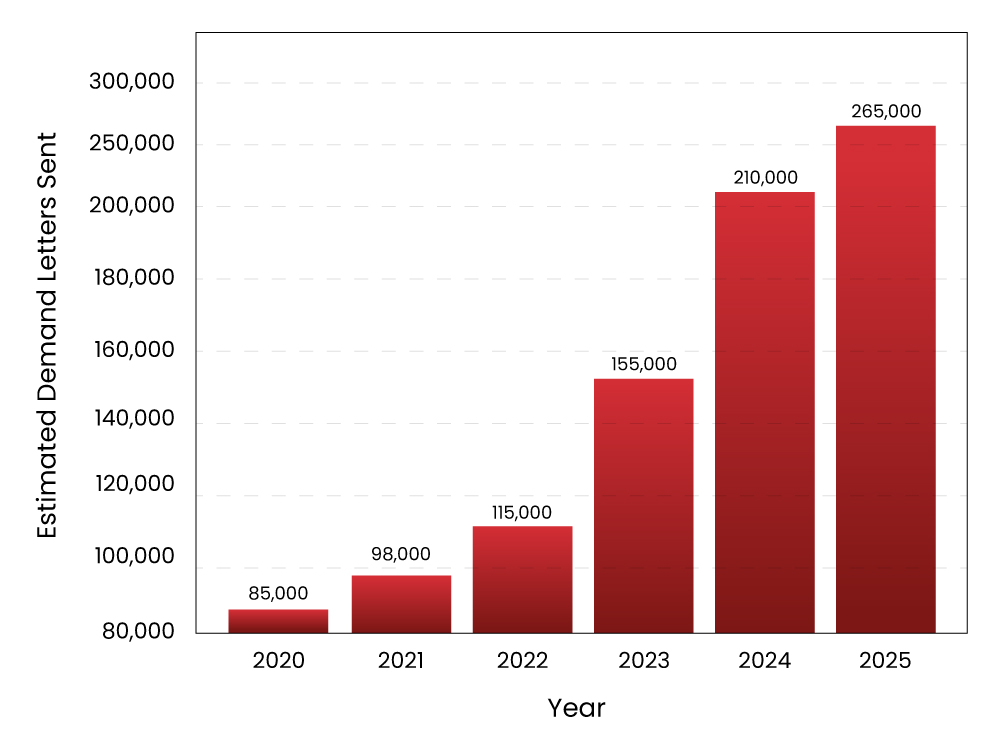
Source: Gemini.Google.com
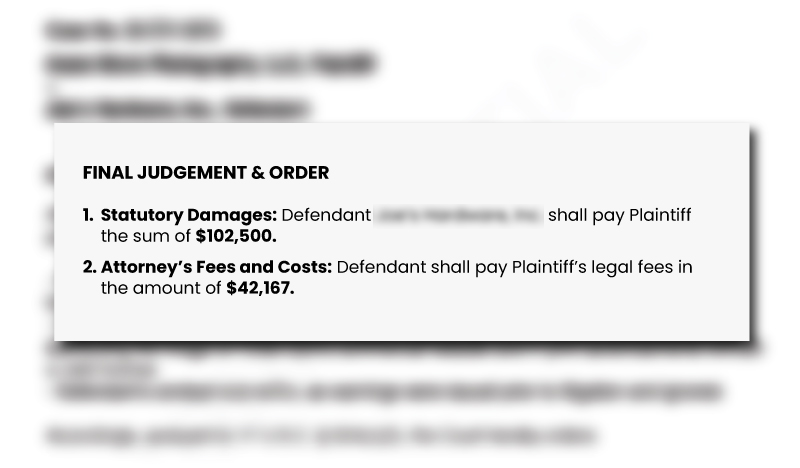
How Much Could This Cost You?
You may have heard that a copyright infringement case that goes to trial could incur a penalty of up to $150,000 per image — plus legal costs. But that’s not the only cost that you could incur. These claims can get expensive, even if you settle out of court. What if you have dozens or hundreds of improperly licensed images?
What’s on Your Website?
Do you know the source of every single image displayed on your site?
Are those images a potentially expensive threat to you?
How do you even figure it out?

Answer: ImageVerifier, your premier image copyright checker.

Also receive 100 bonus credits on your first purchase of 100 credits or more.
ImageVerifier: How it Works
Scans your websites
ImageVerifier scans your public website pages to discover and index any accessible images. ImageVerifier uses reverse image search technology that checks images against billions of online sources.
Delivers a comprehensive image compliance database
Generates your image compliance database, which includes detailed risk and image-match accuracy ratings for all your images. This page is more than a report. It tracks all analyzed images over time, additionally functioning as an ongoing compliance tool.
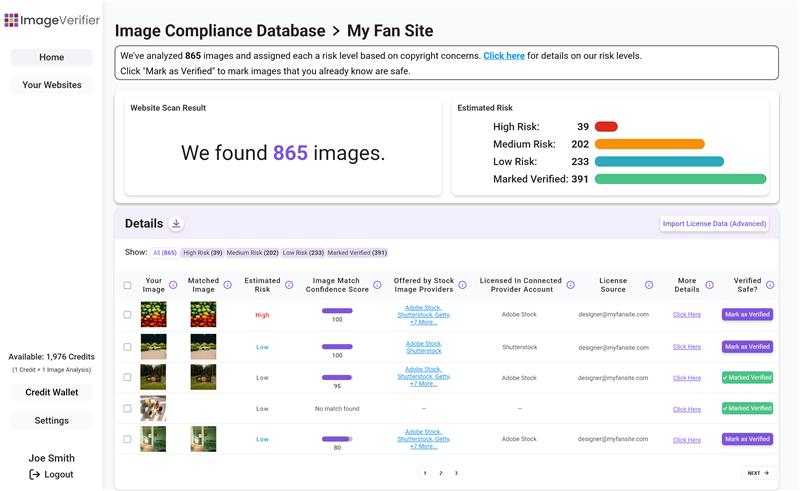
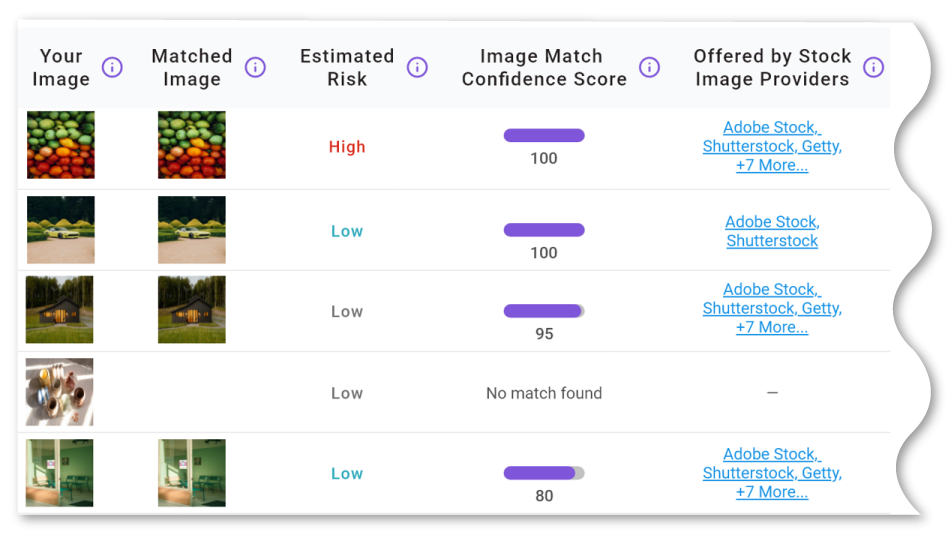
Resolve issues with stock providers
ImageVerifier flags at-risk images and, when a stock provider match is found, gives you a direct link to that image’s page on the provider’s site so that you can independently obtain a license.
Maintain a complete licensing record
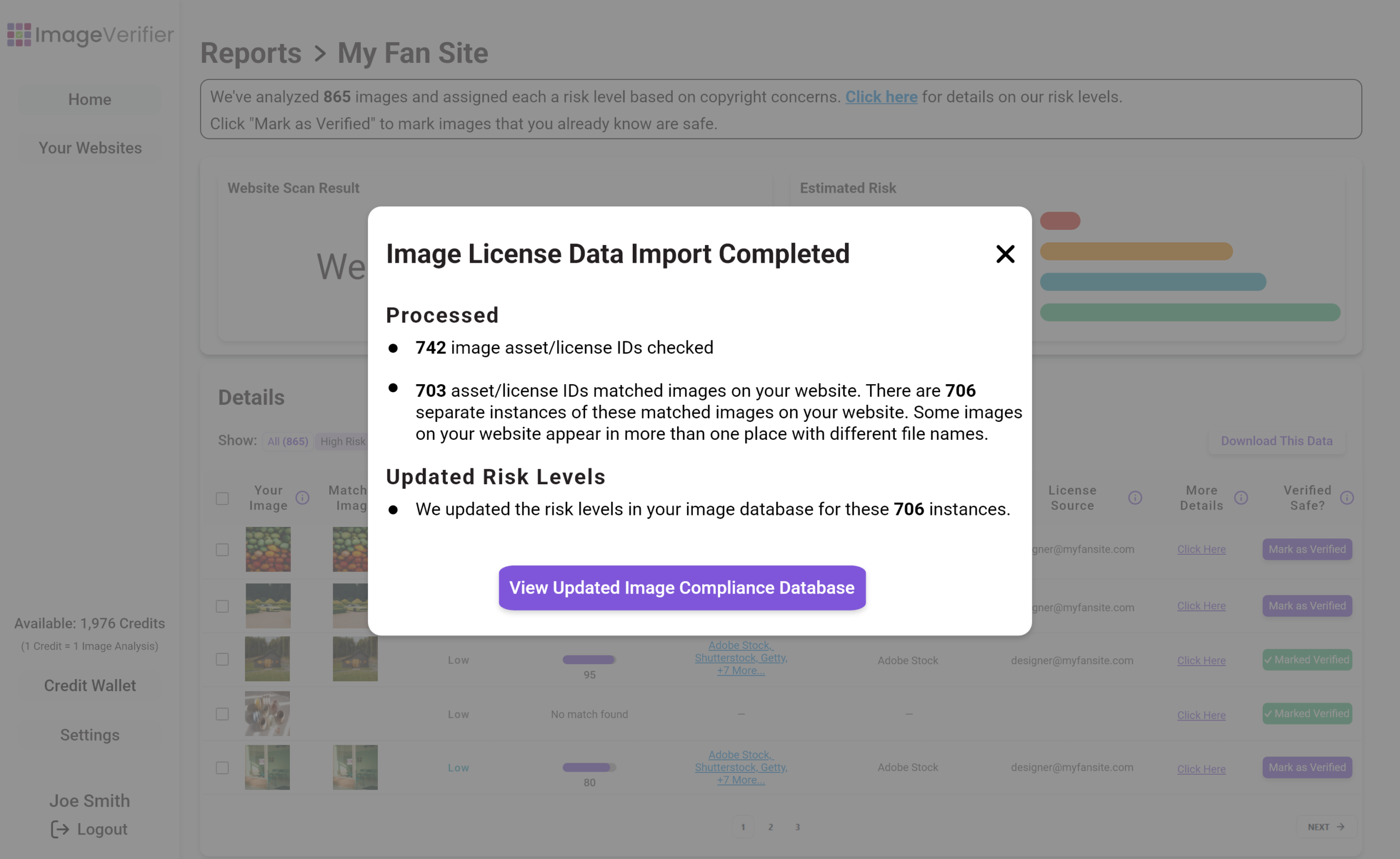
Using the spreadsheet import feature, you can bring in your existing license data from any stock image provider and import it into ImageVerifier. This helps identify potential matches for images found on your site, automatically updating their risk level when license data is imported.
Pre-Publication Scan
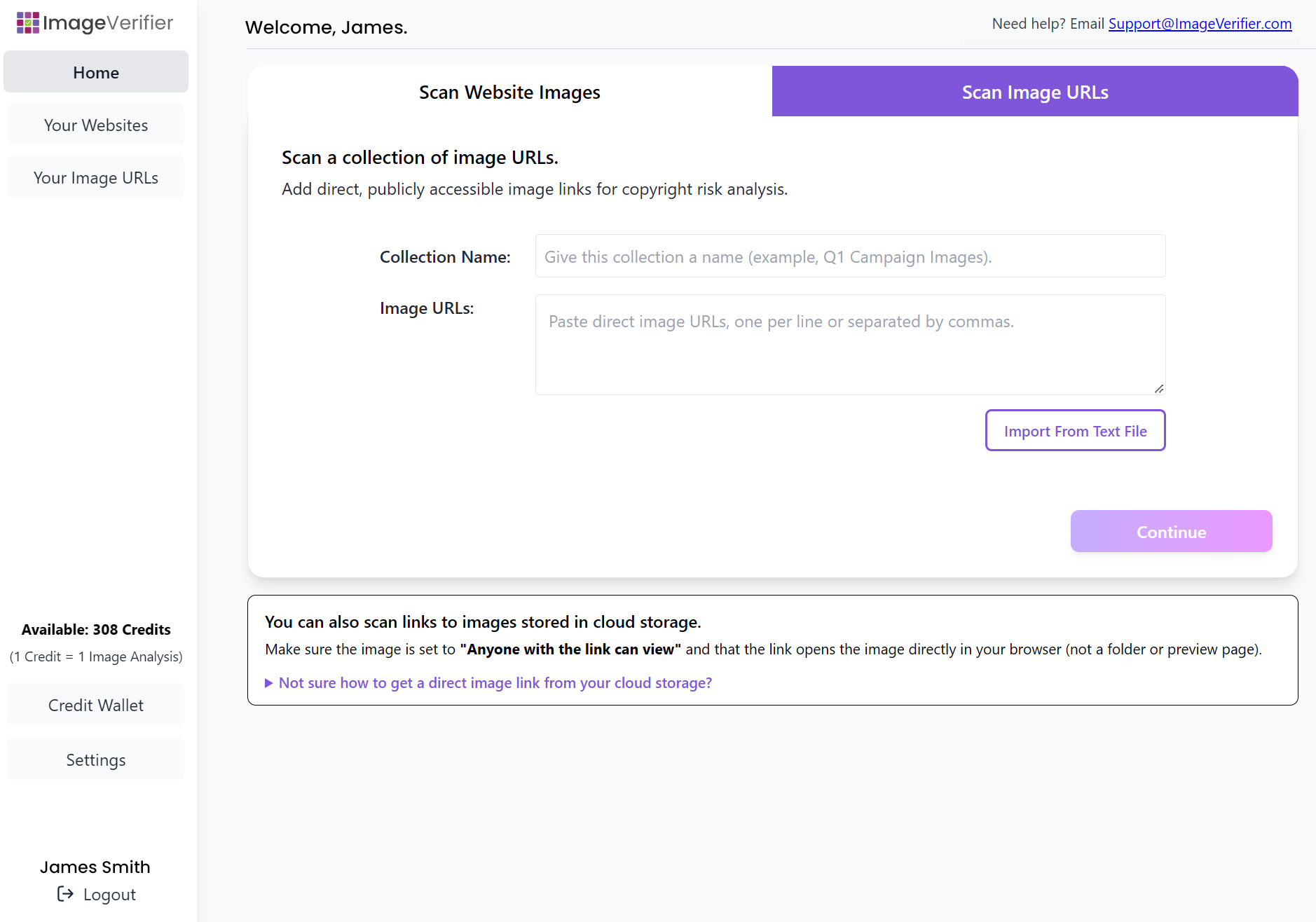
ImageVerifier users can also audit assets before publication, making life easier for agencies reviewing client deliverables and legal teams assessing specific images. It also gives new and existing customers a faster way to check selected images without scanning an entire website
Alongside the existing website scan, you can now check the copyright risk for a specific collection of unpublished images. A new “Scan Image URLs” tab lets you paste a list of image links or import them from a .txt file, name the collection and run the same risk analysis provided for website scans.
Links to images stored in the cloud can also be scanned, provided they are set to “Anyone with the link can view” and each link opens the image directly.
Handling copyright infringement claims can be expensive, stressful and time-consuming. If legal action is threatened for unlicensed use of an image, the consequences can escalate quickly. ImageVerifier helps you ensure that you won’t have to face unexpected and excessive penalties. And perhaps, like us, you value peace of mind.

Also receive 100 bonus credits on your first purchase of 100 credits or more.
The ImageVerifier Benefits
Turning copyright concerns into confidence.
Financial and Reputational Protection
Helps you avoid hefty fines and legal complications related to image use.
Confidence
Makes it easy for you to ensure your images are properly licensed and safe to use.
Operational Efficiency
Saves time and resources with efficient scans and reports, streamlining compliance efforts.
The ImageVerifier Mission
To empower you with the knowledge that helps you protect your organization from costly image-licensing errors and copyright infringement claims

Also receive 100 bonus credits on your first purchase of 100 credits or more.
Important Questions and Answers
Why do I need to check images on my website for copyright risk?
Answer: Most site owners have no way of knowing where every image on their website actually came from, especially if the site has changed hands, been redesigned, or built up years of copy and blog content. Copyright holders and the firms that represent them use automated reverse image search tools to find unlicensed image use, and they’re sending more demand letters than ever: an estimated 269,000 in the U.S. in 2025 alone, up from 85,000 in 2020. Checking your images proactively means you find the problem before someone else does.
How does ImageVerifier help reduce the risk of copyright infringement?
Answer: ImageVerifier scans pages on your website that are publicly accessible, indexes every accessible image, and checks each one against billions of sources using reverse image search technology. The results build your Image Compliance Database, creating a record of every image on your site with an estimated risk level for each, so you can see exactly which images need attention, instead of guessing. Each time you rescan, the database updates, so it tracks your site over time as images are added, replaced or removed. Armed with this data, you can more quickly and easily see what actions are needed to correct the problem ones and thereby majorly reduce your odds of getting legal claims against you or your organization.
Can ImageVerifier help me find where to license an image?
Answer: Yes. When ImageVerifier matches one of your images to a stock library, it shows you which providers carry it, including Adobe Stock, Shutterstock, Getty, DepositPhotos and more. This makes it easier for you, so you don’t have to go hunting for the source yourself.
You can also connect to your Adobe Stock or Shutterstock accounts directly into your dashboard. ImageVerifier then checks your matched images against those accounts and shows you which ones already appear there, along with the platform and the account they’re tied to. That’s usually the fastest way to separate the images you’ve already paid for from the ones you can’t account for.
How can I tell if an image on my site is safe to use without permission?
Answer: In general, an image is probably safe to use without a specific valid license only if: 1) it’s in the public domain, 2) it’s released under a license that permits your specific type of use (such as certain Creative Commons licenses), or 3) it’s an image you created or and licensed yourself. But notice the words “in general” and “probably” in the above sentence. There are lots of rules and caveats, which is another reason so many organizations (and even individual website owners) are wanting to get all the help they can.
“I found it on Google” or “it didn’t have a watermark” are just two common misconceptions, not proof of a valid license. If you can’t point to where an image’s license came from or you can’t verify that the license pertains to your exact manner of usage of the image, treat it as at-risk until you can verify it. That’s exactly the gap ImageVerifier is built to help you close. Without ImageVerifier, getting the data you need will be a long, labor-intensive, expensive and (potentially) more error-prone process.
What happens if I ignore image copyright compliance?
Answer: The risk doesn’t go away. It just stays invisible until an automated bot finds it. Consequences can range from a demand letter requesting a licensing fee, to a legal claim seeking statutory damages of up to $150,000 per image, plus attorney’s fees and legal costs. We’ve seen real cases with judgments well into six figures (with some being seven figures). Even claims that settle out of court can be expensive and time-consuming, especially if a site has dozens or hundreds of unverified images.
What are the most common misconceptions about using online images on one's own website?
Answer: A few misconceptions that come up constantly include “Any image without a visible watermark is free to use”; “Crediting the photographer is as good as having a license”; that “Images marked as ‘fair use’ or ‘educational use’ are okay for commercial or promotional content”; and “Stock images purchased years ago are still properly licensed today even after a site redesign or ownership change”. There are about a dozen more such incorrect (and risky) assumptions. None of them hold up , and each one is a common way organizations unwittingly end up with websites with real legal exposure.
Why have copyright demand letters increased so dramatically?
Answer: Two things changed at once: reverse image search technology improved dramatically and became cheaper to run at scale, and a growing number of firms built business models specifically around finding unlicensed image use and monetizing it through demand letters and settlements. What used to require manually searching the internet for a stolen photo can now be automated across millions of websites, which is a major reason demand letter volume has more than tripled since 2020.
Disclaimer: The information on this website is provided for general information purposes only and does not constitute legal advice. Nothing on this site creates an attorney–client relationship. Copyright laws vary by situation, and you should consult a licensed copyright attorney for advice regarding your specific circumstances.
Don’t Risk It. Verify It.
Your Digital Detective for Copyright-Infringement Risk.

Also receive 100 bonus credits on your first purchase of 100 credits or more.
Glad you’re here! Let’s get you started!
Thanks for exploring ImageVerifier. You’ll be the first to know once we go live. We’ll send you an email notification as soon as we’re ready. Please fill out the form below to join the waitlist.
"*" indicates required fields