
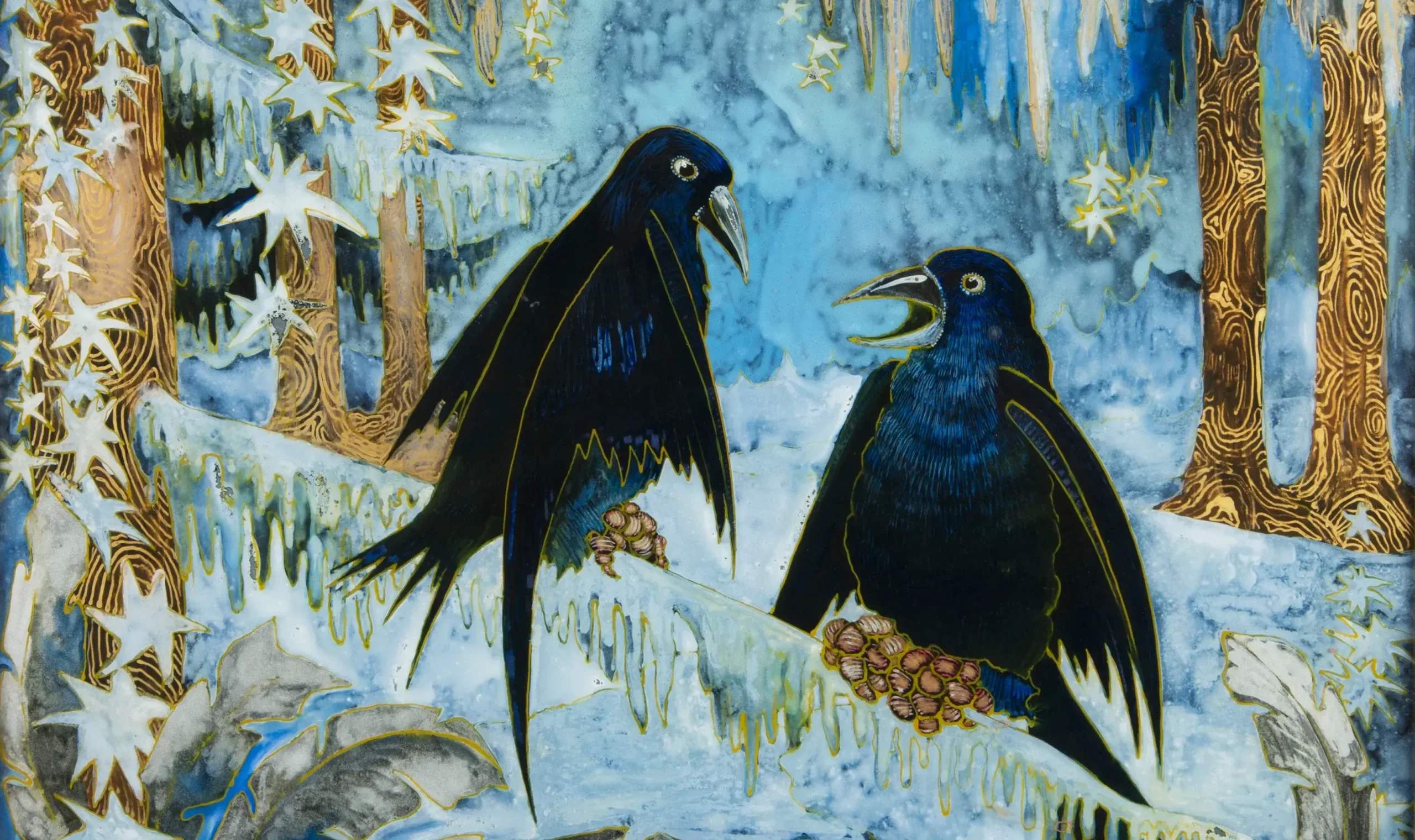
The Gift of Public Domain Images: What, Why, When and Where
Published 24 March 2026
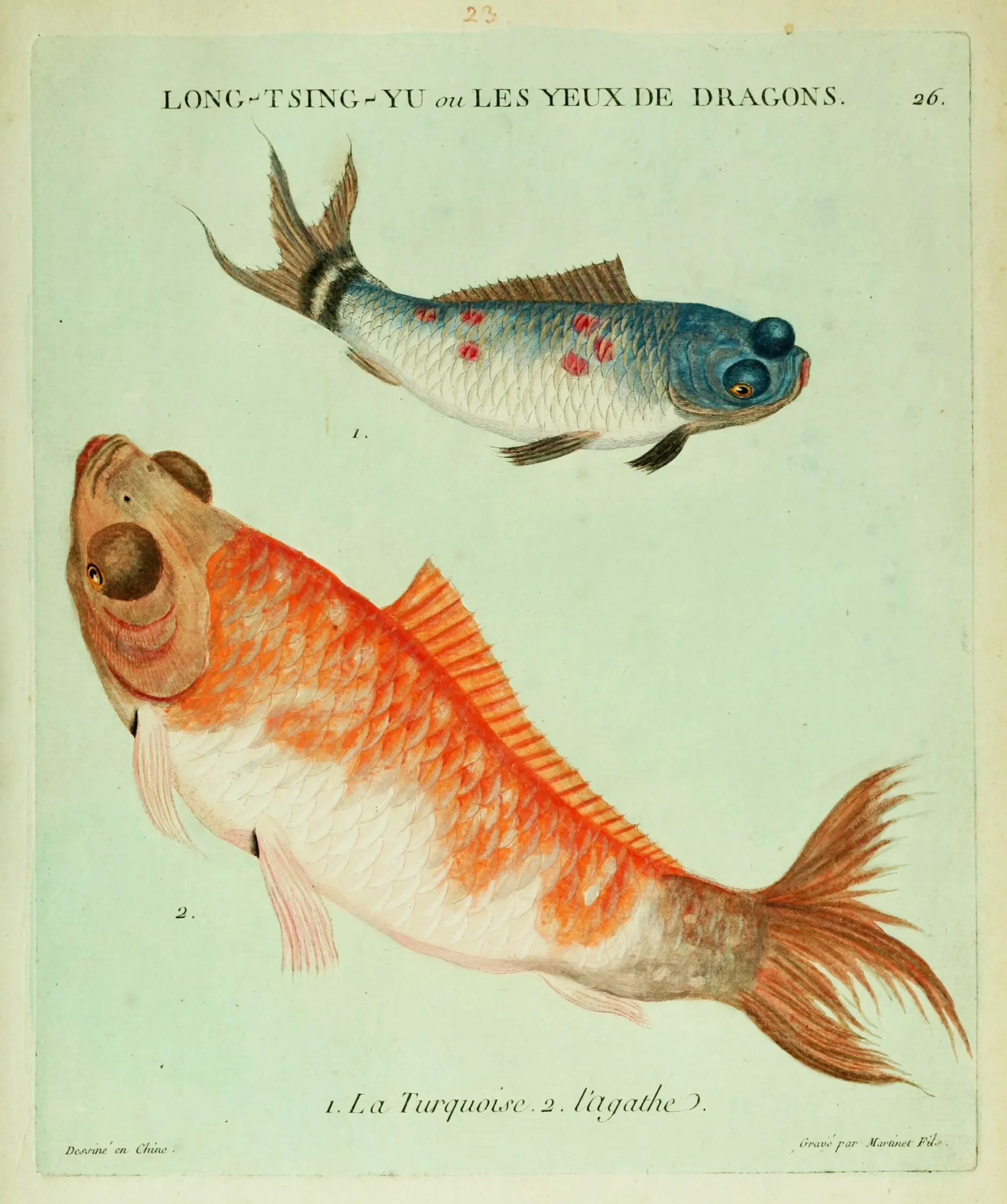
The delicate work of French court engraver, François-Nicolas Martinet (1725–1804)
Every year, as the world recovers from New Year’s Eve, thousands of creative works are quietly gifted to us. Books, films, music, artwork and images officially enter the legal space known as the public domain, meaning their copyright has finally expired.
This annual event of abundance is known as Public Domain Day.
For creators, educators, publishers, designers and website owners, it’s one of the happiest dates on the copyright calendar.
Note: Every image accompanying this article was selected from a public domain website, giving you an inkling of the wide variety of material that’s available. Each image has been cross-checked as outlined in the Important Notes section below.
When Is Public Domain Day?
Every January 1st, previously copyrighted works (whose protection term has ended) automatically enter the public domain in many countries around the world.
In the United States, for example, most works published in 1930 entered the public domain on 1 January 2026, because US copyright generally lasts 95 years from publication for works published before 1978, with some caveats.
(Note: Different sets of copyright periods apply to works published after 1978. There are lots of rules and, of course, some exceptions, but the bottom line is that it won’t be until January 1, 2049, that any post-1978 copyrighted works will meet the requirements to enter the public domain. We’ll set a calendar reminder to write an article about this in a couple of decades.)
Warning: There are lots of details and caveats that apply to the determination of the public domain date of any given copyrighted work. It is not just a simple matter of “doing the math.” Further, the statutes on this may have changed by the time you are reading this article. Always use an up-to-date, valid legal source when trying to determine whether or not any given image is in the public domain.
In many countries, including most of Europe, Canada and Australia, copyright lasts 70 years after the death of the author or creator (often written as “life + 70 years”). Because copyright expiration rules vary globally, a work may be public domain in one country but still protected in another.
What Does “Public Domain” Actually Mean?
According to various sources, when a work enters the public domain, it generally means:
- You can use it without asking permission.
- You don’t need to pay licensing fees.
- You can copy, share, adapt, remix or publish it.
- It can be used commercially.
Public domain collections can be a goldmine, provided you authenticate them correctly.
Public domain works belong to everyone. That includes:
- Classic novels.
- Vintage photography.
- Historical illustrations.
- Early films.
- Sheet music and compositions.
- Archival documents.
For anyone searching for free-to-use images, public domain collections can be a goldmine, provided you authenticate them correctly. (See point 3 in Important Notes below.)
Why Public Domain Day Exists
Public Domain Day was popularized in the early 2000s by legal scholars and cultural organizations who wanted to spotlight the importance of the public domain in sustaining creativity and innovation.
For decades in the US, almost no new works entered the public domain due to extended copyright terms under the 1998 Copyright Term Extension Act. That changed in 2019 when works finally began entering the public domain again after a 20-year freeze. Today, every January brings a new wave of material into open cultural circulation. It’s not just symbolic. It fuels publishing, education, filmmaking, historical research and digital archiving worldwide.
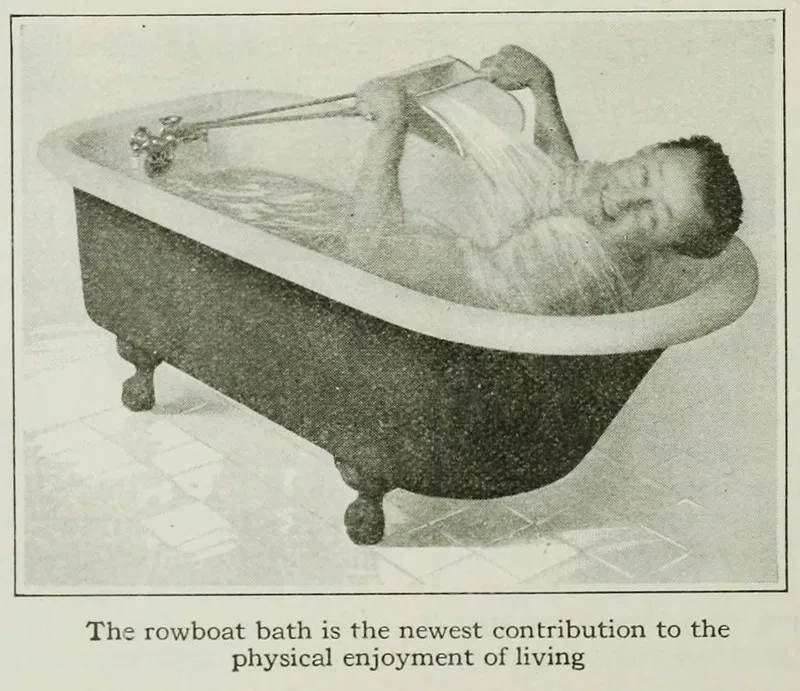
Marketing bathtubs in a 1916-edition of The Popular Science Monthly.
Some of the historical images we’ve seen are deeply thought-provoking markers of the passage of time. Some of the images showcase completely different eras, styles or mindsets. And some of them are simply downright funny, such as the rowboat bathtub. (Whoever dreamed that one up clearly enjoys mopping the bathroom floor …)
Excellent Public Domain Resources Around the World
If you’re looking for reliable public domain images or works that have passed copyright expiration, while we do not make any guarantees that all their data is accurate, these institutions are considered trusted starting points:
Duke University Center for the Study of the Public Domain
They showcase the annual release of works entering the public domain in the United States.
Public Domain Review
Beautifully presented public domain art and texts, with great historical and background information.
Europeana
A massive European cultural heritage platform with millions of digitized items.
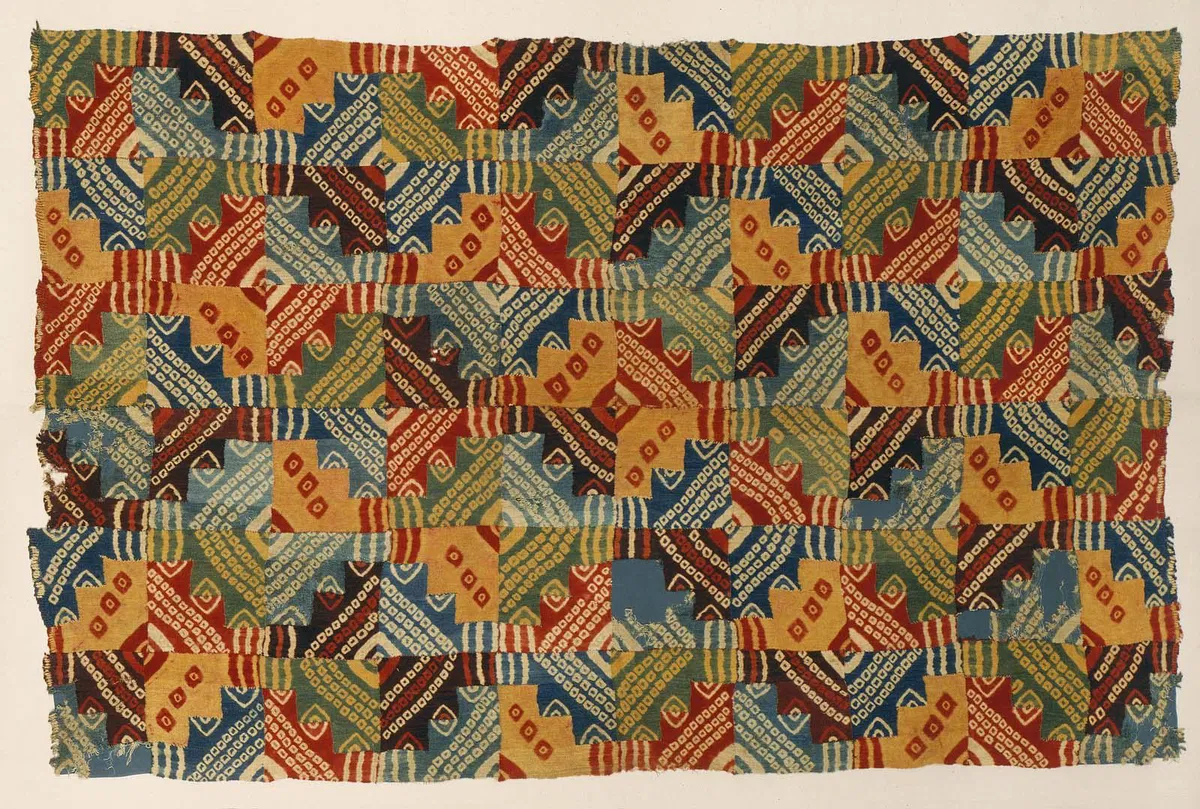
South American Wari textile, dating back to around 700-900, part of a magnificently colorful collection.
International Federation of Library Associations (IFLA)
Global advocacy for access to knowledge and public domain policy.
Project Gutenberg
Over 75,000 free public domain ebooks.
These sources are widely respected and commonly cited in academic and legal discussions about copyright and public domain works. Other sources you may want to explore include NASA’s image gallery, the Library of Congress and the National Archives.
Important: Not Everything Old Is Public Domain
While this would be a great place for a grandpa joke, the truth is, here’s where things get tricky and where many website owners make mistakes: Just because an image looks vintage does not mean it’s free to use.
Common complications include:
- Works restored or colorized later.
- New scans with possible creative claims.
- International copyright differences.
- Unclear authorship.
- Posthumous publications.
- Corporate works with different copyright rules.
For example, a 1920 photograph may be public domain in the US, but a digitally enhanced version created in 2005 may carry new protections. And that same image might still be protected in a country using life + 70 rules if the photographer died later.
This is where copyright verification becomes essential.
Copyfraud: What is It?
Public Domain Day is exciting, but responsible use requires due diligence. In the US, once an image enters the public domain, stock agencies (or anyone, really) are legally allowed to:
- Charge for curated access.
- Charge for convenience.
- Charge for higher-resolution files.
- Charge for metadata tagging and organization.
- Charge under contract terms on their platform.
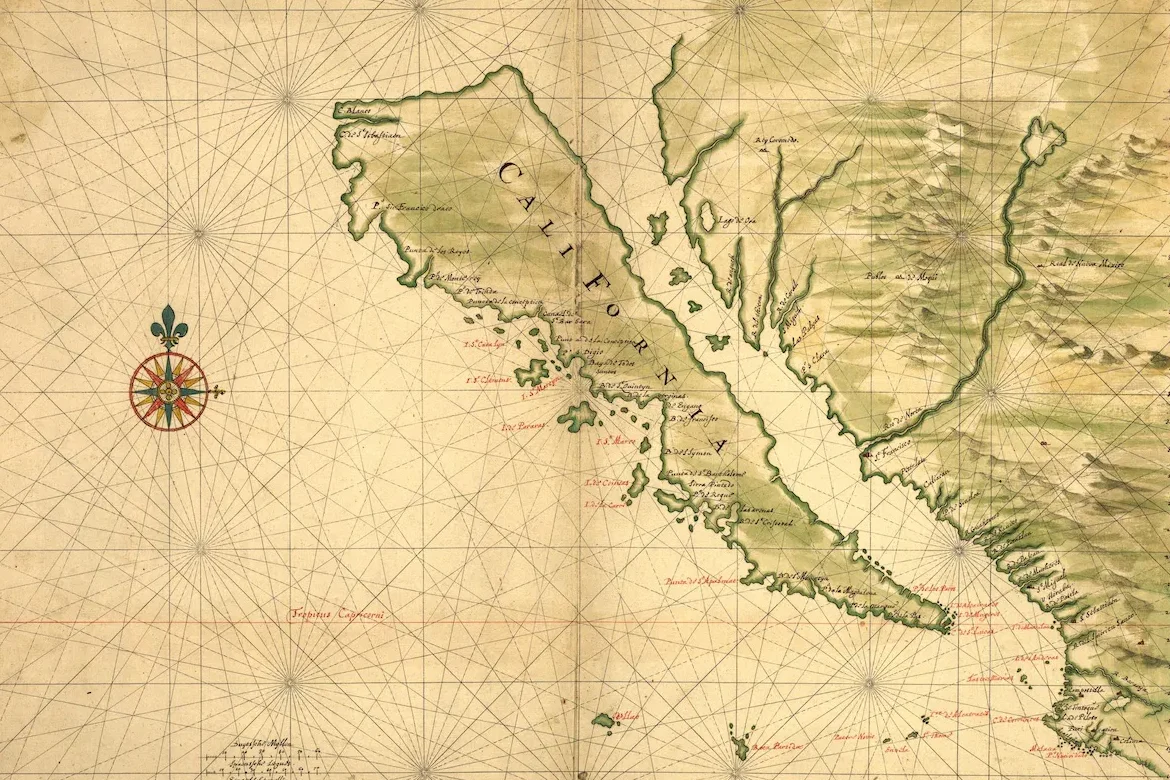
Map of California as an island, circa 1650.
Be aware that you are paying for their service, not for the underlying copyright. When agencies imply ownership they don’t actually have, this is sometimes referred to as “copyfraud.”
Important Notes:
- If you’re going to use a public domain image on your website, always use the version from a reputable public domain site.
- Avoid downloading the image from a stock library, even if it’s the same image. Stock library versions often contain their own watermarks or metadata that may be protected as a “derivative work.” For your legal peace of mind (and to hopefully avoid demand letters), always use the original file from the public domain site of your choice.
- You can cross-check the image using Google’s reverse image search option. Once you’ve reverse searched, you can enter AI mode and query whether the image is in the public domain and what its correct public domain tag is.
- Always document the source of your image, saving the data into a searchable database. If you receive a demand letter, you can prove that you sourced the image from a legitimate public domain site.
When dealing with public domain images, you need to confirm that the work is truly free to use in your jurisdiction when sourcing historical photography, archival illustrations or so-called public domain images for:
- Websites.
- Marketing materials.
- Social media.
- Books or publications.
- Commercial campaigns.
The best use of the public domain is the informed one that doesn’t land you in legal trouble.
ImageVerifier helps reduce the risk of copyright infringement for your website images. To be clear, it cannot determine whether an image is in the public domain. What it can, however, do is determine whether an image runs the risk of infringing on currently copyrighted content. Here’s how it works:
- ImageVerifier scans your public website pages to discover and index any accessible images. ImageVerifier uses reverse image search technology that checks images against billions of online sources.
- ImageVerifier generates an image compliance database for you. This includes detailed risk and image-match accuracy ratings for all your images. This page is more than a report. It tracks all analyzed images over time and also serves as an ongoing compliance tool.
- ImageVerifier flags at-risk images and, when a stock provider match is found, gives you a direct link to that image’s page on the provider’s site so that you can replace or remove the image in question, or independently obtain a license.
- Using the spreadsheet import feature, you can bring in your existing license data from any stock image provider and import it into ImageVerifier. This helps identify potential matches for images found on your site, automatically updating their risk level when license data is imported.
Public domain should feel empowering, not legally uncertain. While nothing is guaranteed, a quick verification step can help you ensure that you’re contributing to online culture safely and confidently (and with less risk to your wallet and/or your job).
Final Thought
Public Domain Day isn’t just a legal technicality. It’s a global reminder that culture evolves because previous generations created, and ultimately shared, their work with the world.
Every January, our creative collective expands.
The key is knowing what’s truly free to use and verifying before you publish. Because the best use of the public domain is the informed one that doesn’t land you in legal trouble.
Disclaimer: The information on this website is provided for general information purposes only and does not constitute legal advice. Nothing on this site creates an attorney–client relationship. Copyright laws vary by situation and jurisdiction, and you should consult a licensed copyright attorney for advice regarding your specific circumstances.
Welcome to the Anti-Troll Tribe!
Thanks for exploring ImageVerifier. You’ll be the first to know once we go live. We’ll send you an email notification as soon as we’re ready. Please fill out the form below to join the waitlist.
"*" indicates required fields