

The $6.3 Million Photo Mistake
Published 10 July 2026
One slip-up. Sometimes that’s all it takes for you to be remortgaging your house. But why? If you own a website, here’s a real-life cautionary tale for you (and anyone who designs or works on your site).
Our story begins in San Francisco, where a photographer named Scott Hargis did what professionals do. He spent years building a portfolio, shooting high-end architecture, working with designers who cared about every angle, every shadow, every line.

Are your website images potentially ticking time bombs?
His photos weren’t just pictures. They were his livelihood.
Then one day, he found dozens of them on a senior living company’s website.
No credit. No license. No permission.
Now, this is the part where most stories sensibly resolve. Maybe there’s an apology. Maybe a small fee changes hands. Everyone moves on.
But that’s not what happened.
Hargis reached out. Calm, professional, giving them a chance to fix it. Pay a licensing fee, take the images down, do the normal adult thing.
They ignored him. The senior living company refused to settle and continued to display the images on their site.
After repeated notices and a prolonged dispute, it became less about the images and more about rights, respect and U.S. copyright law, which, it turns out, has big teeth.
Scott Hargis sued.
And here’s where things get expensive in a way that feels almost theatrical. The court didn’t just say to the senior living company, “Pay the licensing fee you should’ve paid in the first place.” That could’ve been a few hundred dollars, maybe a couple of thousand, given the number of images involved.
Instead, the ruling came back at $6.3 million. Yup. Million.
How Does That Even Happen?
Copyright law in the U.S. allows for statutory damages, especially when infringement is willful. In plain English, if you use someone’s work without permission and then ignore them when they point it out, the penalty can scale fast. Really fast. Willful infringement can cost up to $150,000 per image.
It’s not about the market value of the image anymore. It’s about deterrence. About making sure people take ownership seriously.
The lesson? Ignoring the problem made it catastrophically worse.
The Part Nobody Likes to Admit
Most people don’t think of images as something you can “steal.” You wouldn’t walk into a gallery, take a framed artwork off the wall and walk out, because that would be stealing. But online, it feels different. Frictionless. Harmless.
Right click. Save. Upload. Done. It feels free. But it isn’t.
Every image you didn’t create probably belongs to someone else. And that someone might be very polite at first. They might even give you an easy out.
How you respond is where the story hits a fork in the road.
How you respond is where the story hits a fork in the road.
The Cheaper Ending
There’s a version of this story where there might have been a modest licensing fee. There was potentially even a version where it would have cost nothing more than a quick apology and a takedown.
Instead, it became a case study in how ignoring a problem doesn’t make it disappear. It gives it time to grow those big teeth.
A Simple Rule That Will Save You a Fortune
If you didn’t take the photo, assume you don’t own it. If you want to use it, license it. If someone contacts you about it, respond like a human being who enjoys not losing millions of dollars.
Suddenly, that “free” image is the most expensive freebie you’ve ever had in your life.
The internet has a funny way of making things feel casual that absolutely are not. A photo can look like a simple decoration. A missed email can feel insignificant.
Until one day, their combined value is $6.3 million. And suddenly, that “free” image is the most expensive freebie you’ve ever had in your life.
Do You Trust Your Memory?
Now, here’s the uncomfortable question: Do you actually know where every image on your website came from? Do you have even a vague idea? Is it a case of “I think our old designer handled that,” or “It’s been there forever, so it must be fine”?
We hear you. But do you know?
Most of the time, the answer is no. And that’s the real problem. Not bad intent. Not rogue behavior. Just a quiet pile of uncertainty sitting in your media library, waiting to become someone else’s financial opportunity.
And here’s the twist. The people actively looking for these mistakes aren’t guessing anymore. They’re using software. Automated systems that crawl the web, match images and send out massive numbers of legal demand letters.
Realistically, your hope that “no one will notice” probably doesn’t have a snowball’s chance in hell.
The Fast, Easy Solution
This is where ImageVerifier quietly earns its keep. It’s not glamorous. Not exciting. No one is bragging about their image verification software at dinner. But it does something very useful.
It scans your site, finds your images and checks them against massive databases to see where those images appear across the internet.
It flags the risky ones. If you connect your Shutterstock or Adobe Stock accounts to ImageVerifier, it can check if an image is already licensed. It helps you keep a record so you don’t have to rely on guesswork or memory.
In other words, it can turn “I hope we’re fine” into “We’ve done our homework.”
The Much Better Ending
There’s a version of your story where nothing potentially dramatic ever happens. No angry emails. No legal letters. No courtroom math involving seven digits.
Just a quiet audit, a few quick fixes and the deeply satisfying feeling of not being the subject of the next cautionary tale.
The truth is that these disasters can be avoided. Instead, they’re just … ignored. And ignored things have a way of becoming expensive.
If the first half of this story made you slightly uncomfortable, that’s good. That’s your cue. Have ImageVerifier help you check what’s on your website before someone else does.
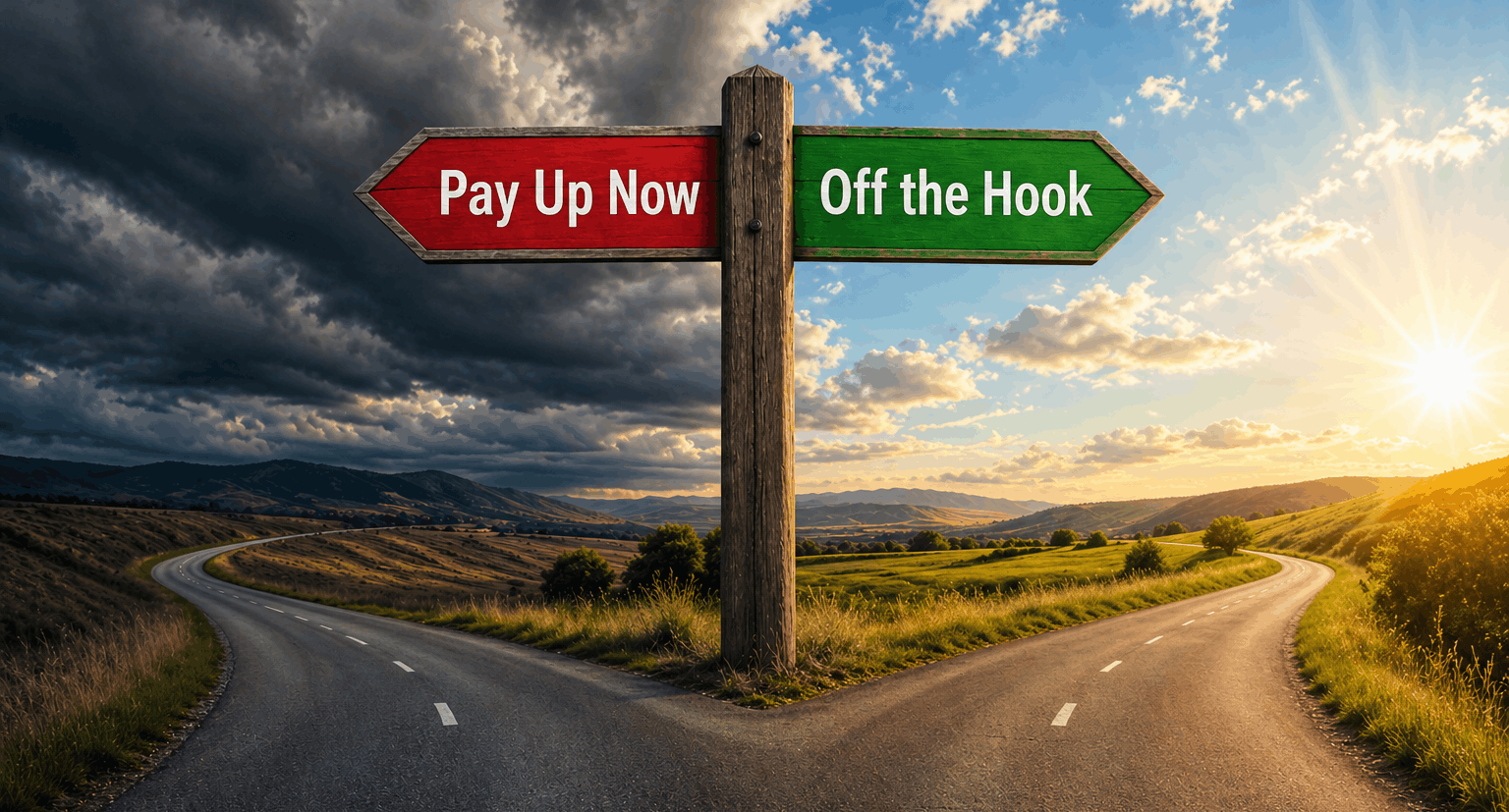
It’s your choice. Make it a good one.
Disclaimer: The information on this website is provided for general information purposes only and does not constitute legal advice. Nothing on this site creates an attorney–client relationship. Copyright laws vary by situation, and you should consult a licensed copyright attorney for advice regarding your specific circumstances.
Welcome to the Anti-Troll Tribe!
Thanks for exploring ImageVerifier. You’ll be the first to know once we go live. We’ll send you an email notification as soon as we’re ready. Please fill out the form below to join the waitlist.
"*" indicates required fields