

The Hidden Risk of Old Website Images Settlement
And Why 10-Year-Old Blog Posts Still Trigger Claims
Published 28 July 2026
There’s a quiet assumption that floats around the internet like an outdated meme: If something has been online long enough, it must be safe. Old blog post? Harmless. Forgotten landing page? Practically invisible. That stock photo you added in 2013? Surely no one cares anymore.
Unfortunately, copyright law does not share our nostalgia. In fact, the older your content is, the more dangerous it potentially becomes.

Taking your own photographs may still be the safest route — and it’s relatively cheap and easy.
Why do decade-old images still trigger legal claims? And why could ignoring your digital “attic” cost you way more than you’d think?
The Mistake of “It’s Too Old to Matter”
If your website has been around for a while, chances are it contains content you haven’t looked at in years. Not necessarily because it’s unimportant, but because newer projects always demand most of the attention. The trouble is, an old image doesn’t become less risky just because you’ve forgotten it’s there.
But copyright owners, photographers, agencies and automated bots? They’re running a full inventory check.
That ancient blog post may feel dead and gone (or at least unimportant), but legally speaking, it’s not.
One key misunderstanding is this: Copyright does not expire quickly, if at all, within a typical business lifecycle. In most jurisdictions, including the US and UK, copyright generally lasts for the life of the creator plus around 70 years.
That means an image you uploaded in 2014 is almost certainly still protected today. And it’s not just protected, it’s actively enforceable.
In your mind, that ancient blog post may feel dead and gone (or at least unimportant), but legally speaking, it’s not.
The Legal Time Machine: Why Old Infringements Still Count
Here’s where things get unintuitive.
You might think there’s a simple statute of limitations (a certain number of years, perhaps?) and anything older than that is safe. But copyright law has evolved in a way that keeps old claims very much alive.
Courts generally apply what’s called the “discovery rule.” In plain English, this essentially means the three-year statute-of-limitations clock starts ticking when the copyright owner discovers the infringement.
But it gets worse (or more interesting, depending on your appetite for legal drama). Recent rulings have also made it possible for plaintiffs to claim damages going back to the start of the infringement, even if that was many years prior to their discovery of it. So, if an image has been sitting unnoticed on your site for the last ten years, you could be liable for ten years of unauthorized use.
That’s not a loophole. That’s the law.
Why Old Blog Posts Are Prime Targets
If you’re wondering why anyone would bother chasing down decades-old images, the answer is simple: ease and scale.
Modern copyright enforcement is no longer manual. It’s an algorithmic dance of the bots.
There are tools that crawl the web, match images and flag unauthorized uses automatically. Once a match is found, enforcement firms or rights holders can issue claims, sometimes in bulk.
From their perspective, older posts may be ideal because:
- They’ve accumulated long-term usage (higher damages potential).
- They’re often forgotten (less likely to be defended).
- They may lack proper documentation (no license proof).
The truth is, copyright owners, photographers, agencies and automated bots tend to actively monitor and pursue unauthorized uses online, typically with settlement demands attached. In other words, your dusty old blog post isn’t invisible. It’s deliciously ripe, low-hanging fruit.
Your dusty old blog post isn’t invisible. It’s deliciously ripe, low-hanging fruit
“But I Gave Credit!” (Spoiler: That, By Itself, Doesn’t Help)
One of the most persistent myths in content creation is that attribution equals permission. It doesn’t. The law doesn’t care.
Adding “Photo by John Doe” under an image may be polite, but it has no legal weight unless the license explicitly permits use with attribution. Copyright law requires permission, not just acknowledgment. This misunderstanding becomes especially risky with older content, where sourcing practices were often … well, let’s say, more relaxed.
Back in the early blogging era, “Google Images + copy/paste” was practically a workflow. Today, it’s a liability.
The Hidden Trap of Expired Licenses
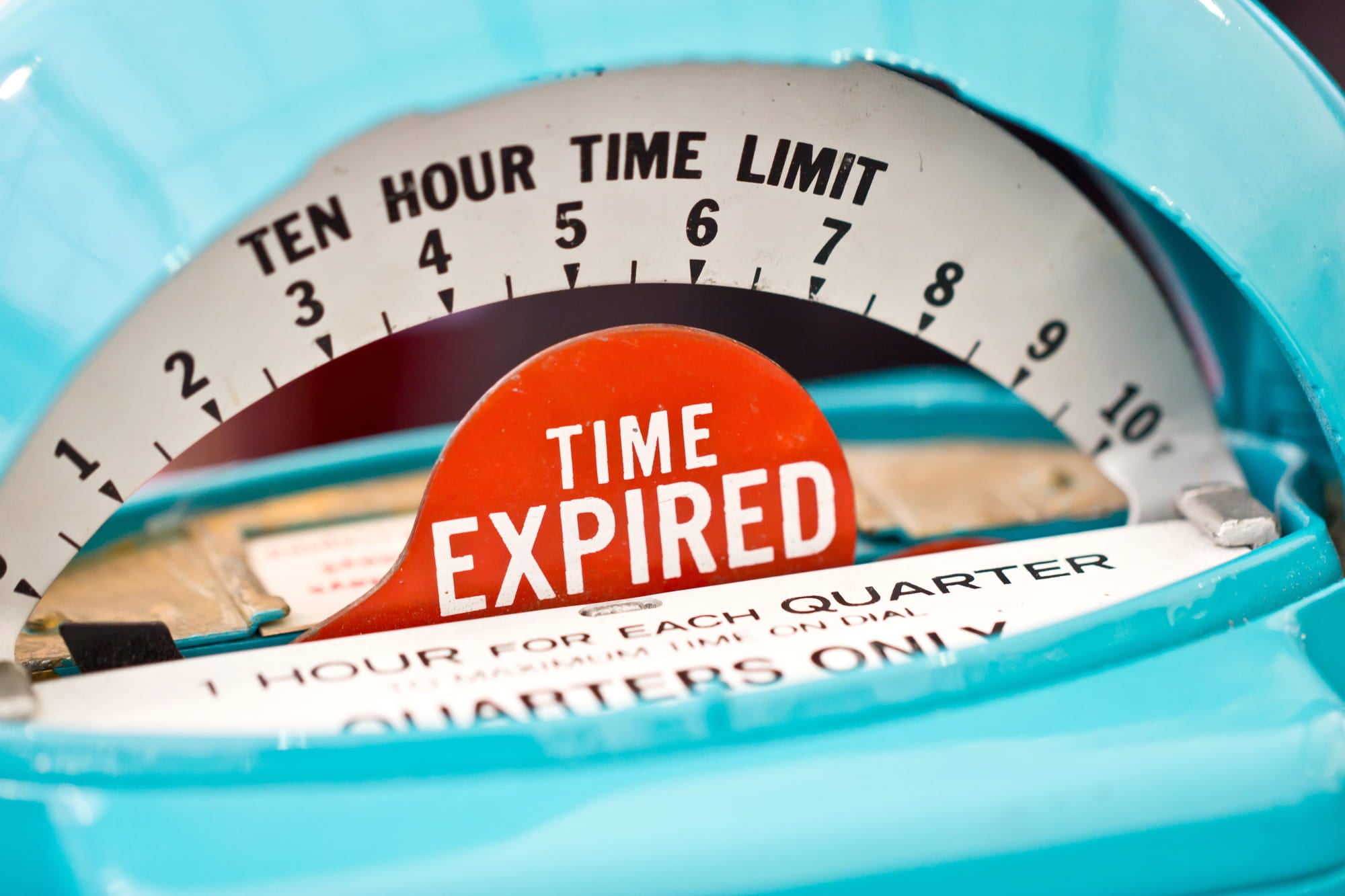
Even older images that were previously licensed may be risky.
Even if you did properly license an image years ago, you’re not necessarily in the clear.
Many image licenses are:
- Time-limited.
- Use-specific (for example, editorial vs. commercial).
- Platform-restricted.
If your usage exceeds the original terms (maybe you’ve kept the image live beyond the license period), you may still be infringing. Using an image beyond its agreed license scope is considered a violation of the creator’s rights.
So that perfectly legitimate stock photo from 2015? It might have quietly become unauthorized in 2018. No notification. No reminder. Just years of risk.
“Old” Doesn’t Mean Public Domain
Another common assumption is that if an image looks old, it’s probably free to use.
This is, at best, dangerously optimistic.
While some very old works are in the public domain, many are not. In fact, depending on circumstances, even family photos or archival images can still be copyrighted, regardless of their age or apparent obscurity.
Unless you’ve verified the copyright status of an image, “it looked vintage” is not a legal defense.
The Rise of Retroactive Claims
Here’s where things take a slightly surreal turn.
Some companies specialize in identifying historical infringements and issuing claims long after the fact. These are sometimes labeled as “copyright trolls,” but their business model is simple:
- Scan the web for image matches.
- Identify unlicensed uses.
- Calculate potential damages.
- Send a settlement demand.
Because damages can range from $750 to $30,000 per image (and up to $150,000 for willful infringement), the numbers can escalate quickly.
Even if your use was accidental (and many are), the financial risk is real.
Why Your CMS Won’t Save You
You might assume your content management system (CMS) has your back. After all, everything is neatly organized and stored, right?
Not quite. Most CMS platforms:
- Don’t track image licenses.
- Don’t flag expired permissions.
- Don’t verify copyright ownership.
So, while your blog archive is technically organized, its lack of transparency makes it legally opaque. That’s why many businesses are now conducting retroactive image audits, essentially reviewing every image ever published to ensure compliance.
Fun? Not particularly. Necessary? Increasingly, yes. Easy? Not at all, unless you have automated help (more on this below).
The Mindset of “Set It and Forget It”
There’s also a human factor at play. Old content feels harmless because it’s passive. It’s not part of your current marketing strategy. It’s not being promoted. It’s just … there.
But copyright law doesn’t distinguish between active and passive use. If an image is publicly displayed, even on a forgotten page, it’s still considered in use. And unauthorized use is still infringement.
Think of it like leaving a borrowed car in your driveway for ten years. You may not be driving it, but you’re still in possession of it. Legally speaking, that matters.

Do you really want to pay for a forgotten image that’s been hiding on your website for decades?
What Should You Do?
Before you panic-delete your entire blog (tempting, but not recommended), here’s a more strategic approach:
1. Conduct an Image Audit
Start with your oldest content. Identify images that:
- Have unclear sources.
- Lack licensing documentation.
- Were added before your current processes existed.
These are your highest-risk assets.
2. Verify Licensing (or Replace the Image)
For each image:
- Confirm the license terms.
- Check expiration or usage limits.
- Replace anything uncertain.
When in doubt, assume you don’t have the rights. License, remove or replace the image.
Keep records. Future-you will be grateful.
3. Use Verified Sources Moving Forward
Stick to:
- Reputable stock libraries.
- Clearly licensed, reputable free image platforms.
- Original or commissioned photography.
And yes, always keep records. Future-you will be grateful.
4. Implement Ongoing Monitoring
This isn’t a one-time fix. New content creates new risk.
Is there a way to do all the above easier and faster? Yes. Regular audits and an image verification tool can help ensure that your site stays compliant over time.
The Irony of the Internet Archive
Here’s the poetic twist: The internet never forgets, and neither does copyright enforcement.
Your oldest content, once a source of pride, can quietly become your biggest liability. Not because you intended harm, but because the rules have changed and enforcement has evolved.
In a world where algorithms can find a needle in a digital haystack, age is no longer protection. It’s exposure.
Parting Thoughts: Sweet or Sour Memories?
If there’s one takeaway from all this, it’s simple: Old images aren’t harmless. They’re just unchecked. And unchecked risks have a way of becoming very real, very fast.
The good news? This is a solvable problem. With the right awareness, process and image verification tool, you can turn your website from a legal minefield into a well-managed asset. Because in the end, your content should work for you — not come back to haunt you.
Your content should work for you — not come back to haunt you.
And if your website has been around long enough to remember dial-up internet (late 1990s to early-to-mid 2000s) … it’s time for a judicious spring cleaning.
Disclaimer: This content is for general informational purposes only and is not legal advice or a substitute for advice from a licensed copyright attorney. It does not create an attorney-client relationship. The authors are not responsible for inadvertent errors or omissions. Laws may change over time and vary by jurisdiction, so consult a qualified attorney regarding your specific circumstances.
Welcome to the Anti-Troll Tribe!
Thanks for exploring ImageVerifier. You’ll be the first to know once we go live. We’ll send you an email notification as soon as we’re ready. Please fill out the form below to join the waitlist.
"*" indicates required fields