

Why Embedding Third-Party Images May No Longer Be Legally Safe
Published 17 February 2026
For nearly two decades, the internet has included a legal sleight of hand so elegant it felt like a magic trick. Publishers, bloggers and even major newsrooms relied on it every day without thinking twice. The trick had a name, the “Server Test,” and it quietly shaped how content spread across the web.
The logic was deceptively simple: If you didn’t store an image or video on your own server, you weren’t legally “displaying” it. Instead, you were merely embedding someone else’s image: dropping in a snippet of HTML code that pulled the content from somewhere else. In theory, you weren’t showing the image at all. You were just opening a window that allowed readers to see the image.
Picture it this way: According to this theory, embedding a third-party image was like inviting readers to look through the window of someone else’s house. If the homeowner had stolen art hanging on the wall, that wasn’t your problem. You were just pointing at it.
However, in 2026, that window is closing, with the East and West Coasts currently taking different approaches. Federal courts are starting to board it up, nail warning signs in place and effectively charge a fat admission fee for anyone who ignores them.
If you’re still embedding content under the assumption that you’re insulated from copyright claims, it may be time to rethink your strategy … before a demand letter does it for you.
A legal sleight of hand quietly shaped how content spread across the web.
The Rise (and Fall) of the “Server Test”
The Server Test was born in 2007, in a case that became an internet norm: Perfect 10, Inc. v. Amazon.com. Perfect 10, an adult magazine publisher, sued Google and Amazon over image search results that displayed thumbnail images linking to infringing photos.
Although captioned Perfect 10 v. Amazon.com, the Ninth Circuit Court (covering the West Coast) focused primarily on Google.

If you’re still embedding the images of others, it may only be a matter of time until you’re whacked with an infringement claim.
Ultimately, the Ninth Circuit sided with Google. Its reasoning hinged on a technical distinction: Google did not host the full-size images on its own servers. Because the files lived elsewhere, Google was not “displaying” them under existing copyright law.
Under the “Server Test”, the term “embedded image” was more or less defined as: “An image that is rendered on a webpage but is not stored on the webpage operator’s server.”
More precisely stated: According to the Server Test, a party is considered as “displaying” a copyrighted image only when the image file is stored on and transmitted from that party’s own server, which can constitute copyright infringement.
That single ruling literally reshaped online publishing.
For years, the Server Test functioned as a legal force field. Bloggers embedded tweets. News outlets embedded Instagram posts. Brands embedded TikToks. Social media managers treated embed codes like permission slips and lawyers often quietly agreed.
The theory was that if you didn’t host the file, you didn’t display it. End of story.
Until it wasn’t.
The Goldman Shockwave
The first major crack appeared in 2018, when photographer Justin Goldman sued several media companies (including Breitbart, Vox and Time) for embedding a photo he took of NFL quarterback Tom Brady.
The image went viral. News outlets embedded the tweet containing Goldman’s photo rather than uploading it directly. Under the Server Test, that should have been safe.
But this time, a New York federal judge disagreed.
In Goldman v. Breitbart, the court rejected the idea that liability should depend on where bits and bytes are stored. What mattered was the user experience. If a reader visited a website and saw the image seamlessly displayed as part of a page, then the site was displaying it, period.
The court put it bluntly:
“Liability should not hinge on invisible, technical processes imperceptible to the viewer.”
That sentence sent a chill through digital publishers. It reframed the interpretation of copyright law around perception, not plumbing, as it were.
From the reader’s perspective, the image wasn’t “elsewhere.” It was right there, on the page.
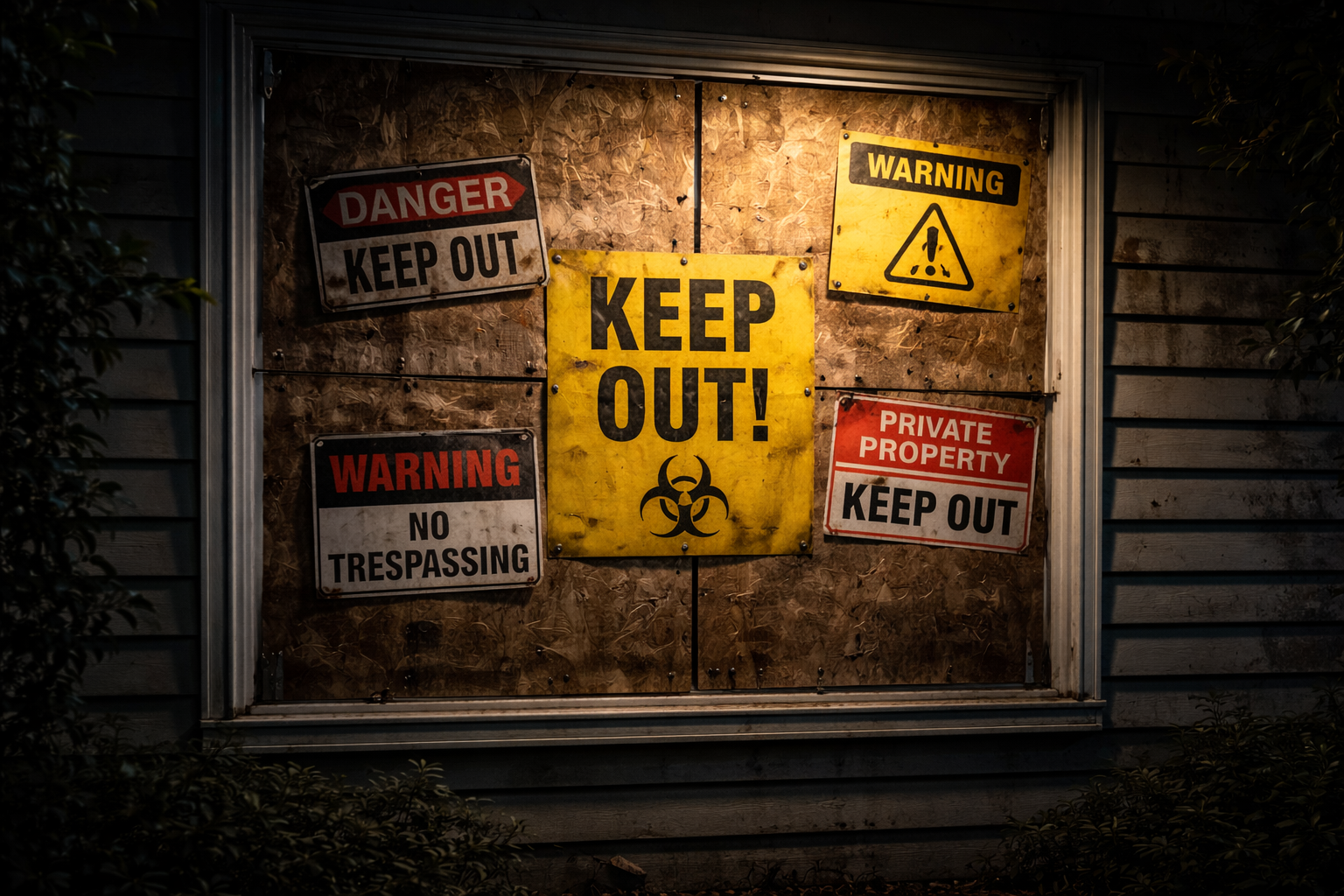
When the federal courts start saying, “Nope, don’t do it, keep out,” it’s probably wise to listen.
The key reason courts are backing away from Perfect 10 isn’t that it was “wrong,” but that it was:
- Deeply technical.
- Server-centric.
- Out of sync with user perception.
Modern courts increasingly ask: “What does the user experience?” They’re not asking, “Where does the file technically reside?” If you think about it, this makes sense in light of the fact that the modern world continues to stampede to the cloud.
Where something resides continues to mean less and less.
It’s the court’s shifting viewpoint that is resulting in increased abandonment of the Server Test.
A Dangerous Circuit Split
Fast forward to early 2026 and the US legal landscape is fractured.
The Ninth Circuit generally continues to recognize the Server Test. Meanwhile, courts in the Second Circuit (which covers New York, the center of US media, publishing and advertising, and is extremely influential in copyright and First Amendment law) and other jurisdictions have effectively abandoned it or sharply limited its reach.
Licensing content may feel expensive … until you compare it to statutory damages, legal fees and reputational damage.
This circuit split has turned embedding into a high-stakes guessing game.
- Where is your company based?
- Where are your servers located?
- Where does the copyright holder sue?
The answers matter and they can determine whether an embed is harmless or potentially financially catastrophic.
Supreme Court decisions on multiple major copyright lawsuits are due to be handed down by mid-2026. Since the Supreme Court outranks both the Circuit Courts and District Courts, these decisions could completely reshape copyright liability law, potentially having a massive impact on the current status quo at a national level.
What does this mean, in real-world terms, for website owners?
1. The Direct Claim Trap
Copyright holders are often no longer simply playing whack-a-mole with takedown notices to those who are embedding the copyright-owner’s images. Increasingly, they may skip the friendly cease-and-desist and go straight to direct infringement claims.
In the context of embedded images, a direct infringement claim means copyright owners (and copyright trolls) are directly accusing website owners of showing their copyrighted images on websites without permission. In other words, they don’t give a flying fig who’s hosting it, only whether viewers can see it on your site.
The automated bots care about only one thing: whether an image is visible on your page.
Why? Because, since Goldman v. Breitbart, the practice of embedding others’ images is now being subjected to serious scrutiny backed by a clearer legal theory in many jurisdictions. If your site displays the image to users, you’re potentially on the hook, legally, even if that image isn’t hosted on your servers, but elsewhere.
2. Platform Terms Won’t Save You
A common defense goes like this: “Instagram provides an embed code, so using it must be allowed.” Courts are increasingly unimpressed by this response. Why?
Because the courts know that platform terms typically grant the platform a license, not you. Unless the original poster explicitly granted sublicensing rights (which is rare), the embed code is a technical feature of the platform, not a legal shield for you.
3. The AI Era is Making Excuses Obsolete
Recent rulings in 2025, including McGucken v. Valnet, signal growing judicial impatience with arguments based on “technical indirection.” “Technical indirection” refers to using behind-the-scenes technical steps to argue that you didn’t really do something, even though, from the user’s perspective, the result is the same. It’s like saying “The computer did it, not me,” or “It came from somewhere else,” even though the content appears on your site.
Physicist and photographer, Dr. Elliot McGucken, sued Valnet for copyright infringement when his images were embedded on various Valnet sites.
While Valnet argued various defenses that are common in digital publishing (such as the Server Test), the primary focus of this case was simply this: Did users see the copyrighted images on Valnet’s sites?
Judges are increasingly skeptical of claims that defendants didn’t really use a work just because a machine handled the details. This case resolved favorably for the photographer.
The Myth of the “Too Small to Sue” Website
Many site owners assume they’re beneath the radar. A personal blog. A niche newsletter. A modest startup site. That assumption is outdated.
Modern copyright enforcement is automated. Agencies and law firms deploy AI-driven crawlers capable of rapidly scanning millions of pages. These systems don’t care about intent, audience size or brand recognition. And they don’t care whether an image is hosted locally or embedded.
Ten visitors to your site or ten million? Makes no difference.
They care about only one thing: whether an image is visible on your page.
If it is, the software flags it, matches it to a rights database and triggers a demand letter, often without human review. Ten visitors to your site or ten million? Makes no difference.
If AI (such as automated enforcement bots) can expose infringement at scale, courts increasingly expect publishers to manage risk at scale too.
Data That Can Help You Protect Yourself Without Killing Your Content
The good news? You don’t have to turn your site into an ugly wall of blue hyperlinks. You just need to update your playbook.
Here’s how common content strategies stack up in 2026:
| Method | Risk Level | Why It Matters |
| Direct Upload | EXTREME | If you host the file, it may be considered clear, traditional infringement exposure. |
| Embedding | HIGH | The Server Test is eroding and is currently rejected in many jurisdictions. |
| Hyperlinking | LOW | Plain text links may remain safe. |
| Original or Licensed Content | MINIMAL | Provable, documented ownership or permission may beat every plaintiff. |
While nothing can provide impenetrable protection, using images you made yourself or that are verified as properly licensed can significantly reduce the odds of a successful copyright infringement claim against you or your organization.
Licensing content may feel expensive … until you compare it to statutory damages, legal fees and reputational damage.

The bots are out there, 24/7, with only one goal in mind: finding images on your site for which they can generate a threat letter. It’s not a game you want to play.
The New Reality
In the eyes of modern courts, the “window” metaphor no longer holds. If a visitor experiences an embedded copyrighted image as part of your site, you may be considered responsible for that display and the ensuing copyright infringement claims.
The technical gymnastics that once protected publishers are losing their persuasive power. What matters now is what the audience sees, not how the code works.
The era of “embed and forget” is ending.
The era of “license and verify” has arrived.
Why This Matters More Than Ever
Whether you’re running a media site, managing brand content or creating products that display third-party images, the risk now lives at the intersection of visibility, automation and perception. If a copyrighted image appears on your page, it may already be on an automated enforcement bot’s radar …
The smartest move in 2026 isn’t guessing where the law might land. It’s knowing exactly what images appear on your site, where they came from and whether you have the right to use them.
It’s no longer just a legal concern. It’s a business essential. And ImageVerifier can help you establish (and document) the facts.
Disclaimer: The information on this website is provided for general information purposes only and does not constitute legal advice. Nothing on this site creates an attorney–client relationship. Copyright laws vary by situation, and you should consult a licensed copyright attorney for advice regarding your specific circumstances.
Welcome to the Anti-Troll Tribe!
Thanks for exploring ImageVerifier. You’ll be the first to know once we go live. We’ll send you an email notification as soon as we’re ready. Please fill out the form below to join the waitlist.
"*" indicates required fields